
How to Use Fundamental Analysis in Forex Free (Without Paying for Expensive Tools)
Most forex traders start with charts. They learn support and resistance, candlestick patterns, moving averages. And then one day, a perfectly clean setup gets stopped out in seconds by a news release they never saw coming.
That's the moment most traders discover fundamental analysis exists.
This guide will show you exactly how to use fundamental analysis in forex — step by step, using free tools — so you understand what's actually moving price before you enter any trade.
What Is Fundamental Analysis in Forex?
Fundamental analysis is the process of evaluating a currency by looking at the economic conditions of the country behind it.
Where technical analysis asks "what is price doing?", fundamental analysis asks "why would price move?"
A currency isn't just a ticker on a chart. It represents an entire economy — its growth, inflation, employment, and the interest rate decisions of its central bank. All of that feeds into whether a currency strengthens or weakens over time.
When you understand the fundamentals, you stop being surprised by news events. You start understanding them.
Why Most Traders Skip It (And Why That's a Mistake)
Fundamental analysis has a reputation for being complicated. Economic reports, central bank minutes, yield differentials — it sounds like something for economists, not traders.
But here's the reality: you don't need to understand every piece of economic theory to use fundamental analysis effectively. You need to understand a handful of key concepts and how they connect to price. That's it.
The traders who skip fundamentals entirely are the ones whose stops get taken out by a CPI print. The traders who integrate even basic fundamentals know when to stay out of the market — and when the macro environment is aligned with their technical setup.
The 4 Core Pillars of Forex Fundamental Analysis
1. Interest Rates
This is the single most powerful driver of currency value.
When a central bank raises interest rates, holding that currency becomes more attractive to investors worldwide — because they earn a better return. Money flows in. The currency strengthens.
When a central bank cuts rates, the opposite happens. Investors move their money elsewhere. The currency weakens.
This is why every Federal Reserve decision moves every USD pair simultaneously. And why watching central bank policy is the most important habit a fundamentals-aware trader can build.
What to watch: Federal Reserve (USD), European Central Bank (EUR), Bank of England (GBP), Bank of Japan (JPY), Reserve Bank of Australia (AUD), Reserve Bank of New Zealand (NZD), Bank of Canada (CAD), Swiss National Bank (CHF).
Free resource: Every central bank publishes its rate decisions and meeting statements on its official website. These are free and more valuable than most paid summaries.
2. Inflation Data (CPI)
Central banks exist primarily to control inflation. So when inflation data prints, it directly affects what the central bank is likely to do next — and therefore what the currency will do.
High inflation → central bank likely to raise rates → currency strengthens Low inflation → central bank likely to cut rates → currency weakens
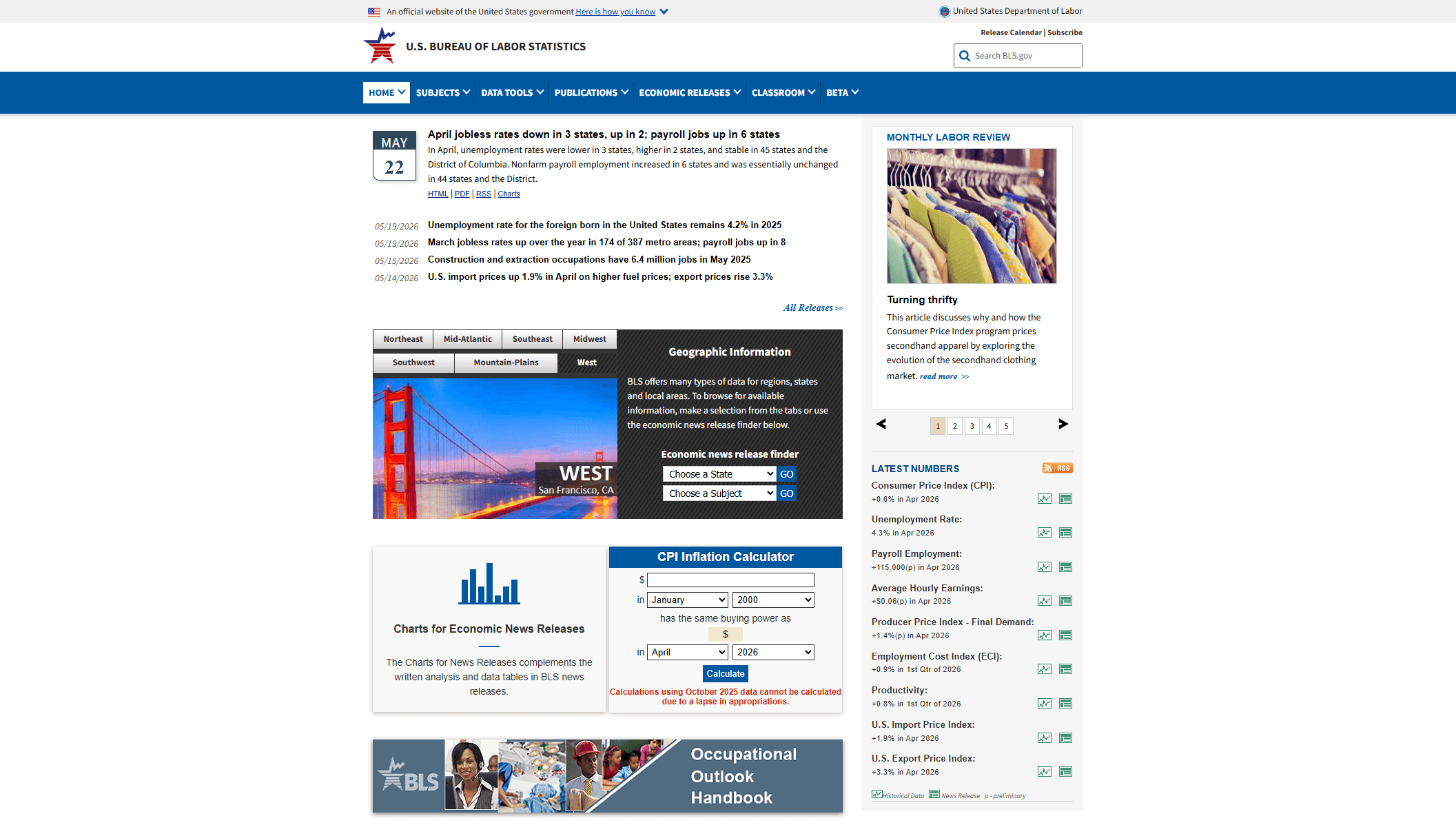
The Consumer Price Index (CPI) is the main inflation measure watched by traders. It releases monthly for most major economies and consistently moves markets on release day.
What to watch: US CPI, UK CPI, Eurozone CPI, Australian CPI.
Free resource: The US Bureau of Labor Statistics publishes CPI data free at bls.gov the moment it releases.
3. Employment Data
Employment tells you how healthy an economy is. A strong jobs market means people are spending, businesses are growing, and the central bank has room to keep rates elevated.
In the US, the Non-Farm Payroll (NFP) report is released on the first Friday of every month. It is arguably the single most market-moving data release in forex. GBPUSD, EURUSD, USDJPY — everything reacts within seconds of the print.
What to watch: US NFP, UK Employment Change, Australian Employment Change, Canadian Employment Change.
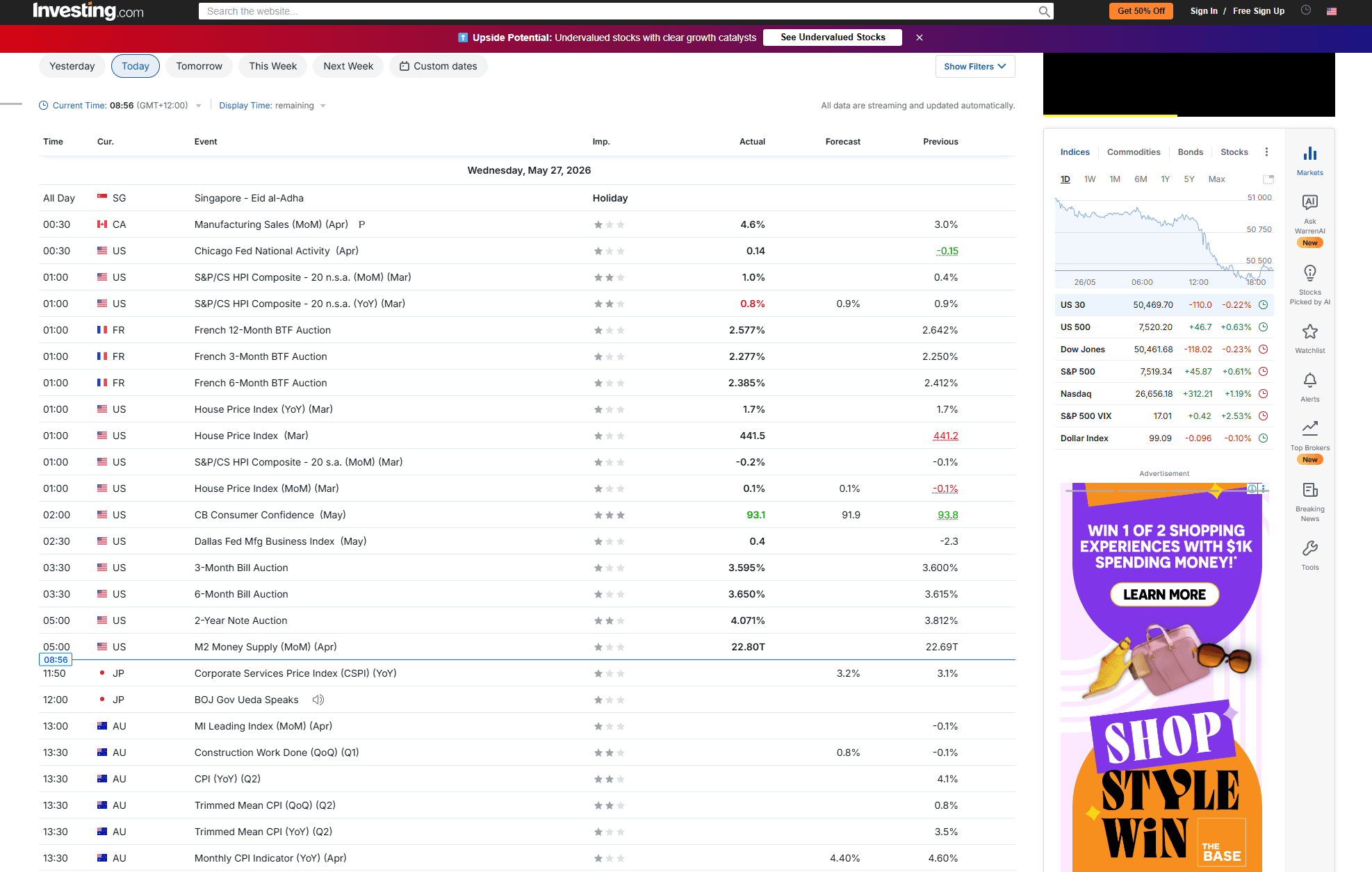
Free resource: investing.com economic calendar is free and shows every major release with the previous number, forecast, and actual result as it prints.
4. GDP (Gross Domestic Product)
GDP measures how much an economy produced in a given period. Strong GDP means a healthy, growing economy. Weak GDP means contraction.
GDP releases quarterly and tends to create slower, more sustained moves rather than immediate spikes. But it shapes the medium-term direction of a currency — particularly when it surprises above or below expectations.
What to watch: US GDP, UK GDP, Eurozone GDP, German GDP (as the Eurozone's largest economy).
How to Actually Apply This Before a Trade
Understanding fundamentals is one thing. Using them before you enter a trade is another. Here's a simple process:
Step 1: Check what's releasing today
Before any session, open an economic calendar and check what data is releasing in the next 24 hours for the pairs you're watching. High-impact events (marked red on most calendars) can move price significantly. If a major release is due in 30 minutes, that's not the time to enter a swing trade.
Step 2: Know the current central bank stance
Is the Fed currently raising rates, holding, or cutting? Is the Bank of England hawkish or dovish? This tells you the medium-term bias for that currency. If the Fed is hiking and the ECB is cutting, the path of least resistance for EURUSD is downward — and your short setups have macro alignment behind them.
Step 3: Check relevant news
What's happened in the last 24 hours that affects your pair? A surprise inflation reading, a central bank speech, a geopolitical event — any of these can flip the short-term sentiment on a currency even when the chart looks clean.
Step 4: Assess whether macro aligns with your technical setup
If your technical setup is long GBPUSD but the Bank of England just signalled rate cuts while the Fed is holding — your setup is trading against the macro tide. That doesn't mean you can't take it, but you should size down and tighten your risk.
When your technical setup and macro environment point in the same direction — that's the highest quality trade available.
Free Tools for Forex Fundamental Analysis
Here's what professional traders use that costs nothing:
Economic Calendar — investing.com/economic-calendar. Shows every major release, its impact level, previous figures, forecasts, and actual results in real time. This should be open every session.
Central Bank Websites — The Fed (federalreserve.gov), Bank of England (bankofengland.co.uk), ECB (ecb.europa.eu). Rate decisions, meeting minutes, and speeches are published here free the moment they release.
FRED (Federal Reserve Economic Data) — fred.stlouisfed.org. A database of hundreds of economic indicators going back decades. Free, institutional grade, and updated constantly.
COT Data (Commitment of Traders) — Published weekly by the CFTC at cftc.gov. Shows how institutional traders are positioned across major currency futures. Retail traders are often positioned opposite to institutions — this data tells you which side the big money is on.
EchelonEdgeAI — If you want all of this filtered and interpreted for your specific pair automatically, EchelonEdgeAI pulls live institutional news, economic data, and macro context and surfaces exactly what's relevant to the asset you're about to trade. It's free during beta. Instead of spending 20 minutes pulling data from five different sources, you get the complete macro picture in one dashboard before entry.

The Most Common Mistake Traders Make With Fundamentals
They try to trade the news event itself.
Jumping into a trade the second NFP prints is one of the fastest ways to blow a stop. The spread widens, price spikes both directions, and the move is half done before most retail traders can react.
The correct use of fundamental analysis is not to trade the news — it's to understand the environment created by the news so you can make better decisions in the hours and days after.
A stronger than expected NFP means USD bullish bias for the session. You look for technical setups that align with that bias. You don't chase the initial candle.
Putting It All Together: A Pre-Trade Checklist
Before entering any trade, run through this:
What is releasing today? Check the economic calendar. Know what's coming.
What is the central bank stance for both currencies in my pair? Identify the medium-term macro bias.
What has moved in the last 24 hours? Check relevant news for your pair.
Does my technical setup align with the macro environment? If yes, proceed with confidence. If not, reduce size or wait.
Am I entering within 30 minutes of a major release? If yes, wait until after or skip the trade.
This takes less than five minutes. It won't replace your technical analysis. But it will stop you from entering trades that are walking directly into a macro headwind — and it will increase your conviction when everything lines up.
Final Thoughts
Fundamental analysis doesn't have to be complicated. You don't need a Bloomberg terminal or an economics degree.
You need to understand what moves currencies, where to find that information for free, and how to integrate it into your existing process before each trade.
The traders who combine clean technical setups with macro awareness are not a different breed. They just added one step to their pre-trade routine.
Start with the economic calendar. Learn the central bank stance for the pairs you trade. Check the news before you enter. Build it into a habit.
And if you want a tool that does all of that filtering for you in one place — EchelonEdgeAI is free to use right now during beta.